

Cosmetics / Personal Care
Non-animal safety testing for cosmetics and personal care
CBT supports cosmetics and consumer product companies (and chemical industry) with human-relevant, non-animal safety testing aligned with current regulatory expectations, including MOCRA.

Applications
Where we help
Our platforms use 3D reconstructed human tissues that closely mimic in vivo physiology, enabling reliable and predictive safety assessment without animal testing.
- Cosmetic ingredient and industrial chemicals safety evaluation
- Finished product safety testing
- Regulatory support (MOCRA-aligned safety substantiation)
- Product development and formulation screening
Our Capabilities
3D reconstructed human tissue models
3D Human Skin Models
Using 3D reconstructed human epidermis (RhE):
- Skin irritation and corrosion
- Barrier function and toxicity
- Repeat exposure studies
Scientific basis
Multi-layered keratinocyte cultures replicate the stratum corneum barrier, enabling accurate prediction of irritation and corrosion responses.
OECD Guidelines
- Skin Irritation: OECD TG 439
- Skin Corrosion: OECD TG 431
Eye irritation
Using 3D reconstructed human corneal epithelium (RhCE):
- Eye irritation assessment using validated in vitro systems
- Alternatives to animal testing
Scientific basis
Stratified corneal epithelial cells reproduce ocular surface responses, allowing prediction of irritation potential through viability and barrier disruption endpoints.
OECD Guideline and Methods
- Eye Irritation: OECD TG 492
Methods
EpiOcular™ Eye Irritation Test (OCL-200-EIT)
For assessment of eye irritation
Sub-Draize Mildness Testing (MTT ET-50)
For Use with EpiOcular™ Tissue to determine ET-50
Inhalation Toxicity (In Vitro)
Using 3D reconstructed human airway / respiratory tissues:
- Aerosols, sprays, and volatile compounds
- Respiratory exposure assessment
Scientific basis
Air–liquid interface cultures of bronchial epithelial cells mimic respiratory tract architecture and exposure conditions, enabling realistic aerosol and vapor testing.
Regulatory context
MOCRA-aligned safety substantiation
OECD Status: Studies conducted using advanced, scientifically validated in vitro approaches
| Endpoint | Model | Guideline |
|---|---|---|
| Skin irritation | RhE | OECD TG 439 |
| Skin corrosion | RhE | OECD TG 431 |
| Eye irritation | RhCE | OECD TG 492 |
| Inhalation | Airway / respiratory tissues | — |
Scientific Validation
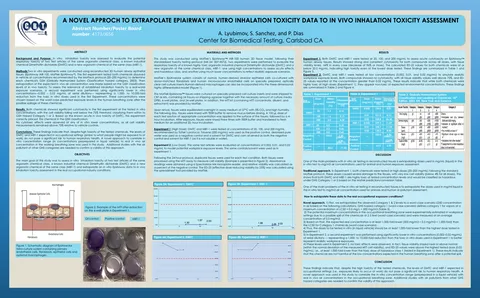
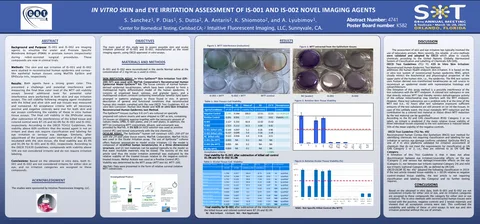
Our in vitro models are supported by data presented at the Society of Toxicology (SOT), demonstrating their predictive performance and applicability to real-world safety assessment.
Skin & ocular models
Validated using OECD TG 439 and TG 492 with demonstrated reliability in irritation classification
Inhalation models
Novel approach developed to correlate in vitro airway exposure with real-world occupational inhalation scenarios
Robust assay performance
Validated methods addressing common challenges such as test article interference and assay sensitivity
Why CBT
Why Work With CBT
- Human-relevant testing using 3D reconstructed human tissues
- OECD-aligned methods where applicable
- Fast turnaround and flexible study design
- Experience supporting regulatory submissions
- Integrated analytical and toxicology capabilities